Perifollicular Fibrosis in Androgenetic Alopecia
DOI:
https://doi.org/10.62742/2965-7911.2026.3.BJHH43Keywords:
Androgenetic alopecia, Perifollicular Fibrosis, TGF-Beta, Hair Follicle Miniaturization, Antifibrotic TherapyAbstract
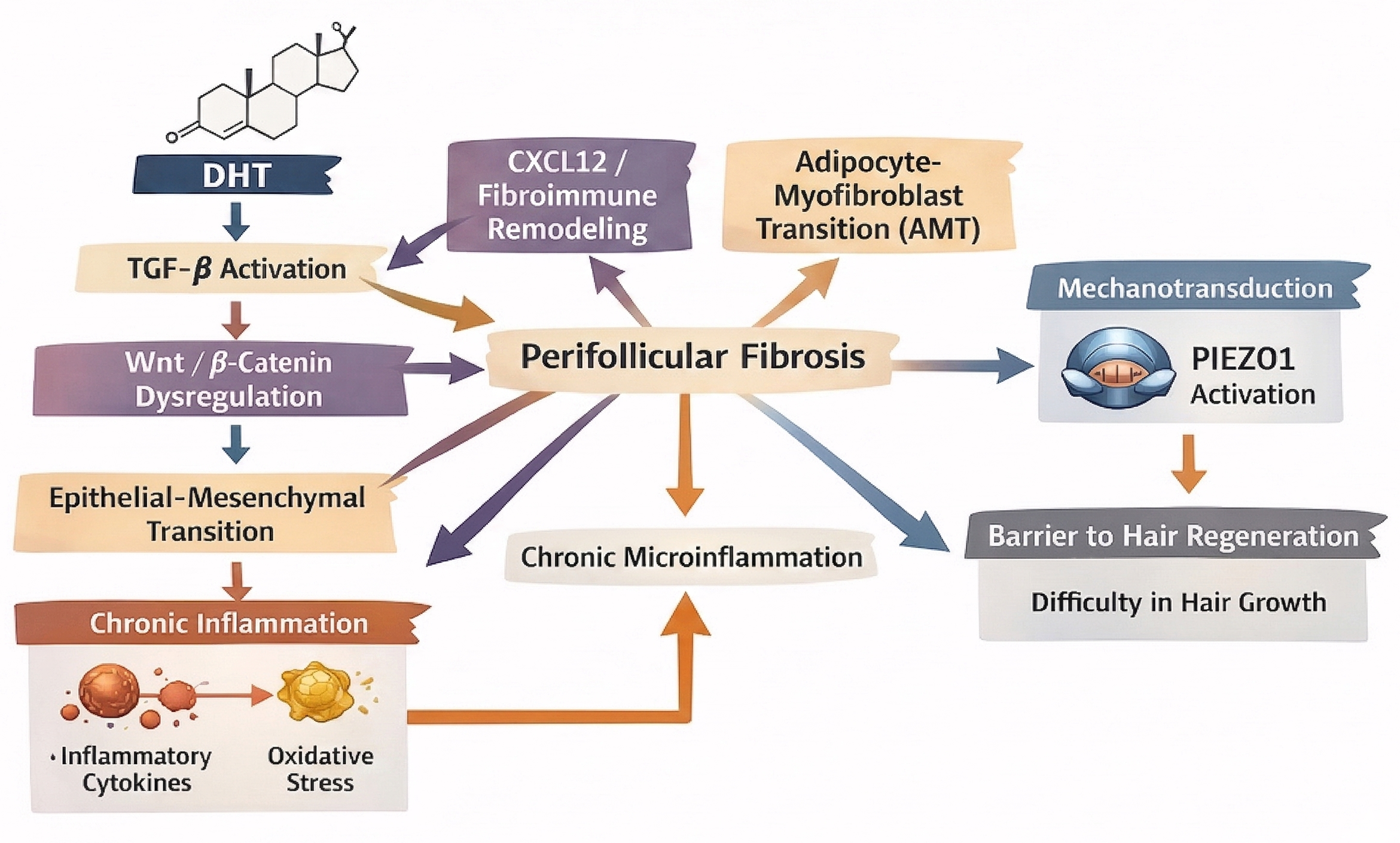
Androgenetic alopecia (AGA) is characterized by progressive hair follicle miniaturization driven by androgen signaling. Emerging evidence demonstrates that perifollicular fibrosis plays a critical role in limiting hair regrowth and reducing therapeutic response to conventional treatments. This narrative review synthesizes current understanding of the pathophysiology of perifollicular fibrosis in AGA, focusing on androgen-driven profibrotic signaling cascades, transforming growth factor-beta (TGF-β) activation, Wnt pathway dysregulation, epithelial-mesenchymal transition, and chronic microinflammation. We examine how concentric collagen deposition and dermal sheath thickening create mechanical and biological barriers to follicular regeneration, explaining the limited efficacy of minoxidil and 5-alpha-reductase inhibitors in advanced disease. Clinical implications, diagnostic approaches including histopathology and molecular biomarkers, and therapeutic strategies are comprehensively reviewed. Conventional treatments show partial antifibrotic effects but are insufficient once fibrosis is established. Anti-inflammatory approaches, mechanical interventions including microneedling and platelet-rich plasma, regenerative cell therapies, and emerging pharmacological targets such as TGF-β blockade, CXCL12 neutralization, and mechanotransduction modulation represent promising avenues. While preclinical and early clinical data support several antifibrotic strategies, robust randomized controlled trials with objective fibrosis endpoints remain limited. Future research should prioritize combination therapies targeting both androgen signaling and fibrotic pathways to restore follicular regenerative capacity in AGA.
Downloads
Downloads
Published
Issue
Section
Categories
License
Copyright (c) 2026 Brazilian Journal of Hair Health

This work is licensed under a Creative Commons Attribution 4.0 International License.