Sleep, Gut Microbiota and the Hair Follicle: A Narrative Review and Integrative Model of the Sleep Gut Follicle Axis
DOI:
https://doi.org/10.62742/2965-7911.2026.3.BJHH47Keywords:
Sleep, Gastrointestinal Microbiome, Hair Follicle, Circadian Rhythm, AlopeciaAbstract
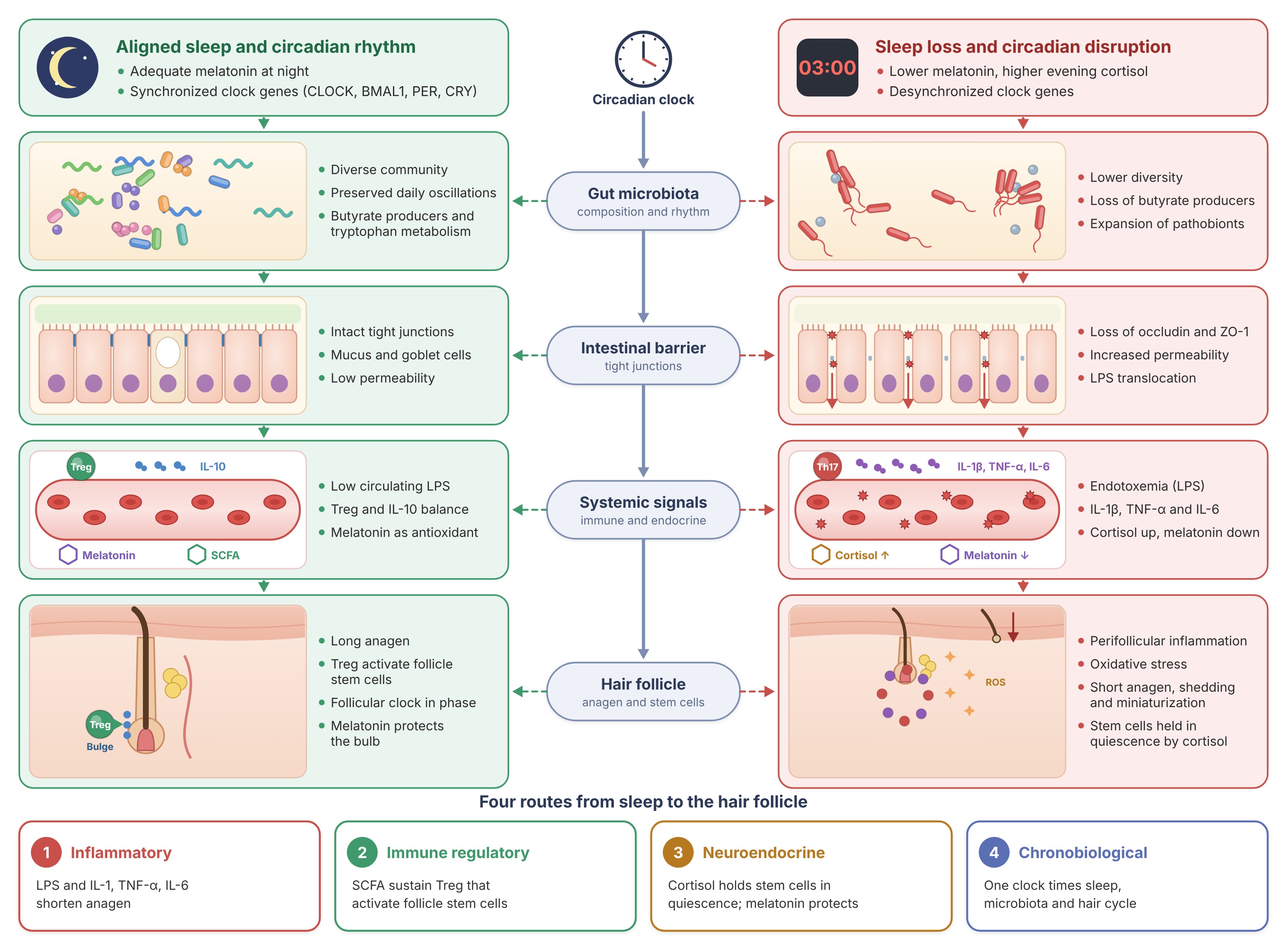
Sleep is an active physiological process that organizes immunity, metabolism and tissue regeneration, and is now recognized as a regulator of the gut microbiota. This narrative review examines the evidence that connects sleep, the intestinal microbiota and the health of the hair follicle, and proposes an integrative model of a sleep gut follicle axis. Short, fragmented or misaligned sleep is associated with changes in microbial composition and diurnal rhythmicity, impaired intestinal barrier function and low grade systemic inflammation, and the microbiota, in turn, influences sleep, the circadian clock and the stress response. Each of these intermediate signals has a documented target in the hair follicle: the human follicle senses bacterial products through toll like receptor 4, its growth is inhibited by interleukin 1, tumour necrosis factor alpha and interleukin 6, its stem cells depend on regulatory T cells that are shaped by microbial metabolites, it synthesizes and responds to melatonin, it operates a local equivalent of the hypothalamic pituitary adrenal axis, and it runs its own circadian clock, which is disturbed by night shift work. Clinical studies associate sleep disorders with alopecia areata and with the severity of androgenetic alopecia, and Mendelian randomization suggests that specific gut taxa influence the risk of both conditions. No study has yet measured sleep, microbiota and hair outcomes in the same individuals; the axis is therefore presented as a mechanistic model with explicit levels of evidence and testable predictions. Sleep deserves to be assessed in trichological practice as a modifiable determinant of follicular health.
Downloads
Downloads
Published
Issue
Section
License
Copyright (c) 2026 Brazilian Journal of Hair Health

This work is licensed under a Creative Commons Attribution 4.0 International License.