Non-Invasive Transdermal Delivery of Exosomes via Iontophoresis in Female Androgenetic Alopecia: A Case Series
DOI:
https://doi.org/10.62742/2965-7911.2026.3.BJHH46Keywords:
Female Androgenetic Alopecia, Iontophoresis, Electroporation, ExosomesAbstract
Introduction: Female androgenetic alopecia (FAA) is a condition that may affect up to 50% of adult women. Its etiopathogenesis involves androgenic influence, genetic predisposition, and lifestyle factors. It is a chronic, progressively evolving condition requiring continuous treatment. Pathophysiologically, FAA is characterized by microinflammation of the dermal papilla of the hair follicle, leading to progressive miniaturization of hair fibers and their transformation into vellus-type hairs — thinner, shorter, and less pigmented — resulting in reduced hair density and significant aesthetic impact.
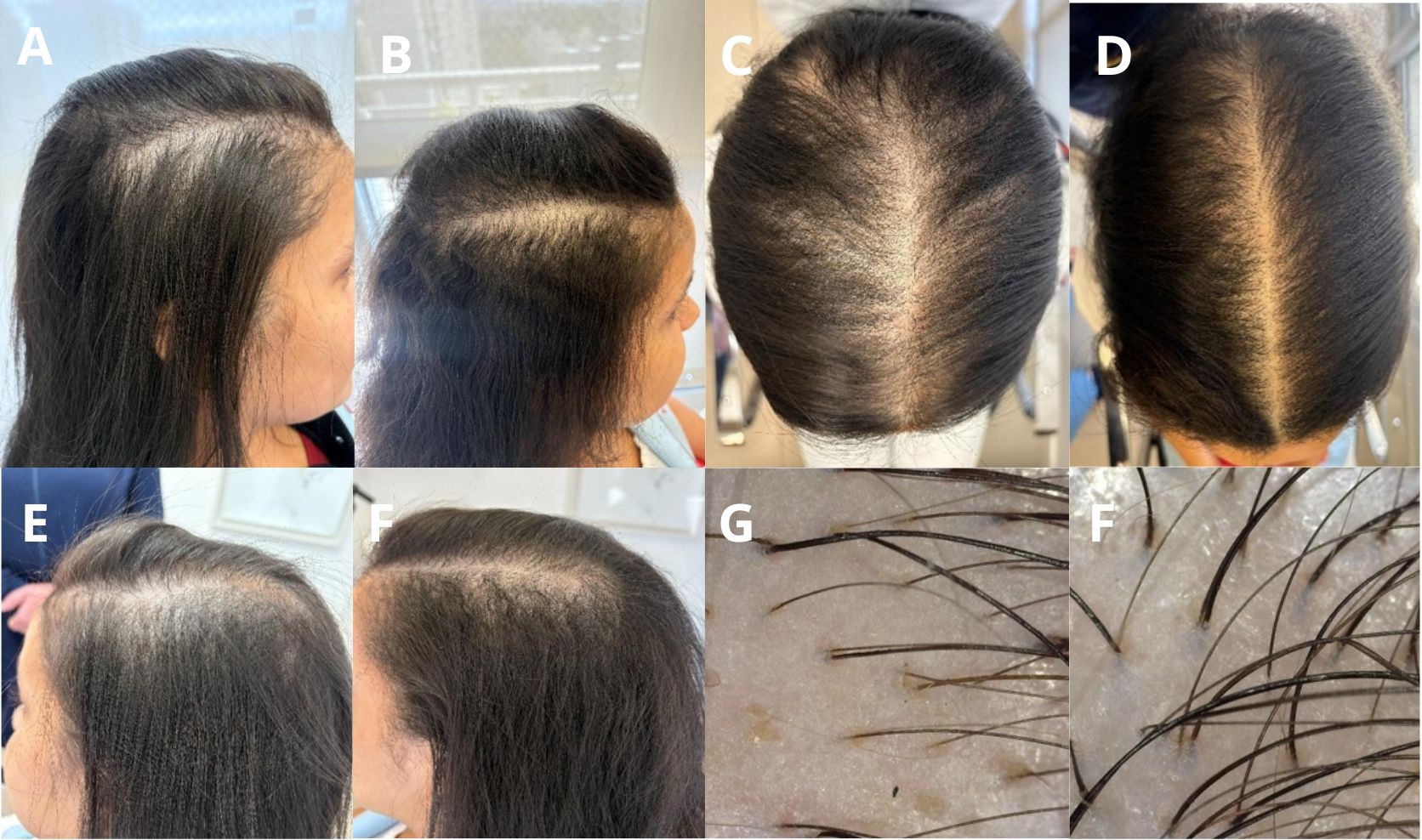
Case Report: This report presents three patients with a confirmed diagnosis of female androgenetic alopecia who underwent hair treatment combining iontophoresis with exosomes over five sessions at 20-day intervals. Iontophoresis is a non-invasive technique that uses an electric field to optimize transdermal delivery of active agents. Exosomes are extracellular nanovesicles that carry proteins, RNA, and growth factors, promoting intercellular communication, repair, and tissue regeneration.
Conclusion: The combination of iontophoresis/electroporation with exosomes demonstrated high efficacy over a short period, increasing hair density, improving hair quality, and reducing scalp inflammation. No discomfort was reported during the procedure. Further studies are needed to confirm its efficacy.
Downloads
Downloads
Published
Issue
Section
License
Copyright (c) 2026 Brazilian Journal of Hair Health

This work is licensed under a Creative Commons Attribution 4.0 International License.